Breaking the Iron Law: Turning Illusion into Execution Excellence
How GIGA Projects Can Escape Overruns Through Tools, People, and Process Alignment using the PMI-Construction Professional Framework
GIGA projects — such as entire smart cities, economic corridors, tourism zones, or giga-industrial hubs — represent the most ambitious forms of development in the modern world. Seen across regions like the Middle East, Africa, and parts of Asia, they promise national transformation, global visibility, and long-term impact. Yet, despite visionary leadership and massive investments, many GIGA projects suffer from delays, cost overruns, and scope instability.
Bent Flyvbjerg described this as the "Iron Law of Megaprojects": over budget, over time, under benefits — over and over again. For GIGA projects, the stakes are even higher. A delay doesn't just hurt a milestone; it can damage international confidence, derail investor timelines, or disrupt long-term urban planning.
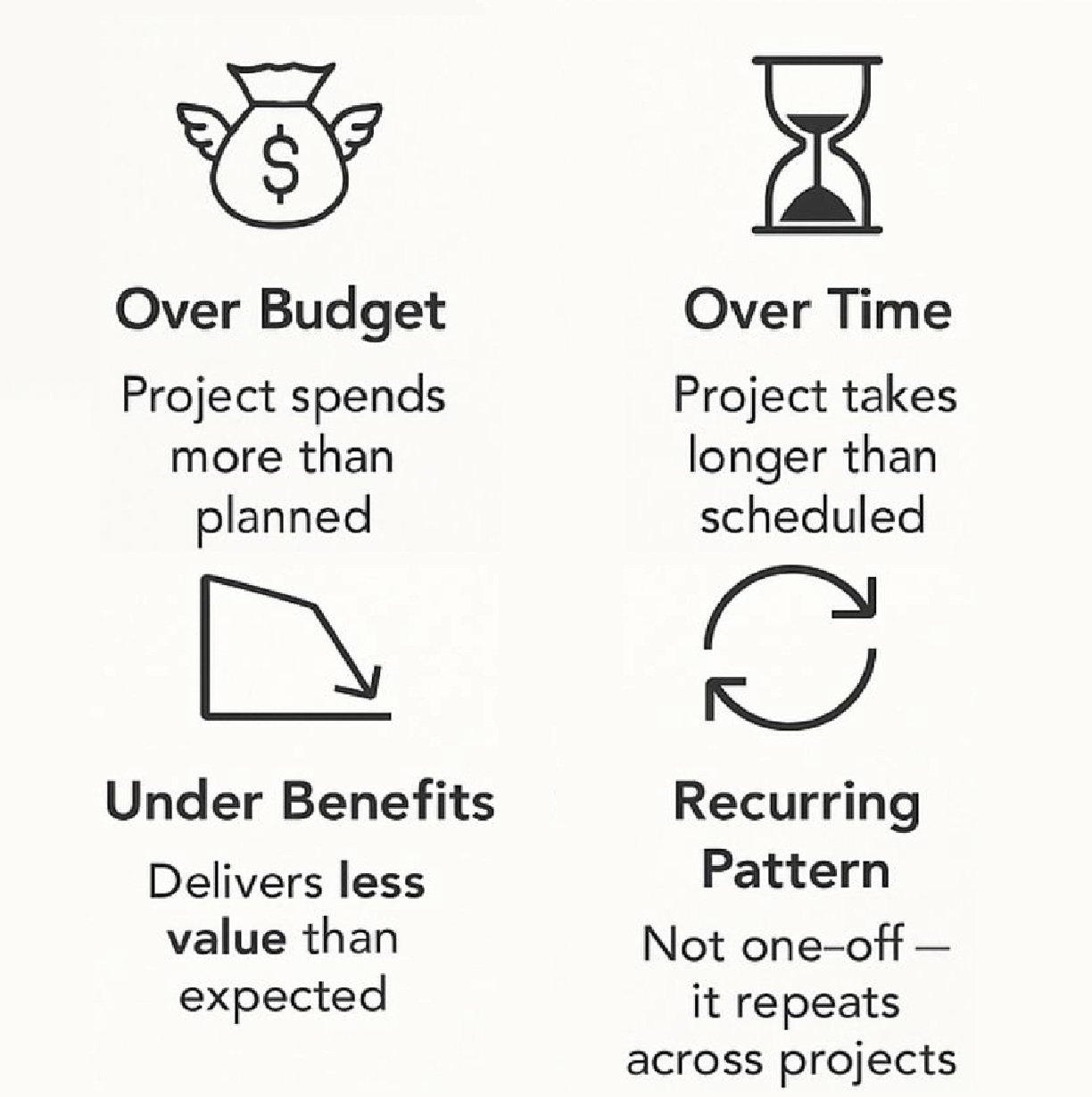
The root causes are not just technical. They are deeply human: planning fallacies, optimism bias, decision silos, and overreliance on best-case assumptions. The solution lies in building integrated systems where people, tools, and processes work together to reduce bias, improve flow, and enable learning.
The GIGA Planning Illusion
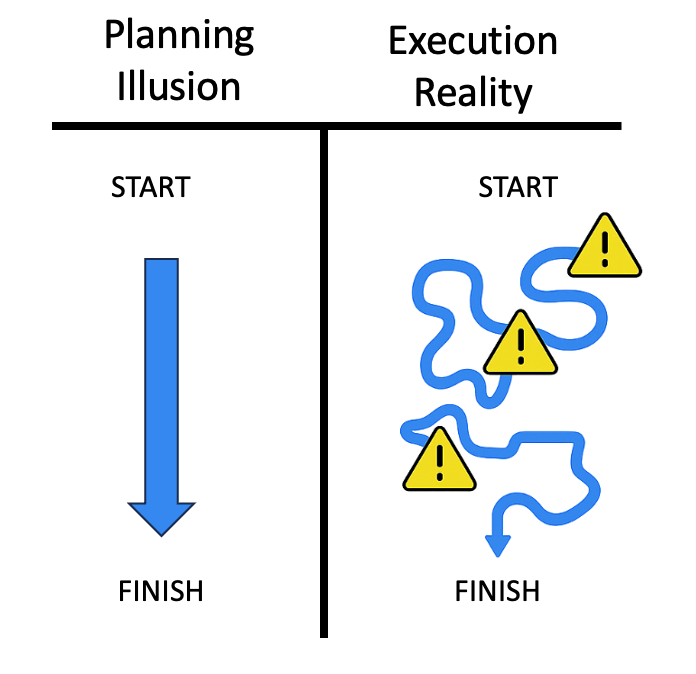
In the early phases of GIGA projects, masterplans are announced with powerful visualisations, aggressive timelines, and bold claims. But planning under uncertainty often leads to unrealistic assumptions. Teams believe their context is different, more advanced, or politically protected from risk. This results in underestimating lead times for land acquisition, design coordination, and regulatory compliance; overconfidence in contractor capability or technology readiness; and schedules fixed around media dates rather than technical feasibility.
These biases get compounded by strategic pressures. Some teams knowingly suppress risk data or exaggerate socio-economic benefits to gain approval. Known as strategic misrepresentation, this behaviour sets projects on an unstable foundation from the start. To understand how different behavioural biases play out across a project lifecycle, the map below outlines the most common psychological traps seen in GIGA project environments:
| Stage | Bias at Play |
|---|---|
| Concept/Approval | Overconfidence, Technology Sublime |
| Execution | Narrow Framing, Anchoring Bias |
| Recovery | Loss Aversion, Inaction Bias |
These behavioural patterns, if left unaddressed, quickly translate into operational inefficiencies on the ground. At the same time, complexity rises exponentially. GIGA projects often involve hundreds of contractors, multiple master developers, and overlapping scopes. Without strong interface management and short-term planning systems, workfront clashes and scope gaps become inevitable.
Systemic Gaps in GIGA Delivery
These behavioural traps manifest in very real, operational challenges on the ground. GIGA projects often face a range of systemic delivery issues that weaken planning integrity, disrupt coordination, and increase rework.

Fragmented Communications
Multi-tier governance often leads to siloed information flow. Site teams, consultants, and ministries are not always aligned.
Disconnected Planning Tools
High-level scheduling tools (like Primavera) don't always sync with site-level readiness or material flow.

Underdeveloped Risk Culture
Known risks (e.g. water table issues, regulatory bottlenecks) are noted but not acted upon until they become crises.

Lack of Learning Systems
Lessons learned are not captured or analysed. The same mistakes repeat across packages and zones.
Left unaddressed, these gaps create an execution environment where assumptions replace evidence, coordination suffers, and learning does not scale. The result is a cycle of misalignment and missed opportunities across zones, phases, and contractors.
To counter this, GIGA projects must shift from reactive firefighting to proactive system design — aligning people, tools, and processes from the start.
Reframing Solutions: A Lean + PMI-CP Approach
To succeed, GIGA projects must combine behavioural awareness with structured tools that bring discipline to delivery. This is where Lean Project Management and PMI-Construction Professional (PMI-CP) best practices can play a transformative role.
- Build scope certainty early: Use Project Definition Rating Index (PDRI) to measure scope maturity before work begins. Apply Scope Readiness Checklists to ensure packages are fully defined before tender. Deploy Standardized Change Request Templates and Digital Change Order Workflows to log all modifications formally.
- Strengthen communication and governance: Develop and monitor a Communication Strategy & Plan with defined frequency, channels, and responsibilities. Use Big Room (Obeya) environments and Active Listening Frameworks to bridge design, delivery, and operations. Apply the Compass Diagnostic Tool to assess communication maturity across organizations.
- Fix interface chaos: Implement a Master Interface Plan (MIP) and maintain Interface Registers to manage handoffs. Use Interface Control Documents (ICD) to avoid ambiguity in scope and deliverables. Automate follow-up with Interface Workflow Engines to track issue resolution.
- Make risk visible and actionable: Conduct early and recurring Integrated Project Risk Assessments (IPRA) and map risks with Heat Maps. Apply Risk Breakdown Structures (RBS) to ensure no domain (technical, commercial, political) is overlooked. Link risks to proactive actions using Claim Prevention Frameworks and Dispute Resolution Pathways.
- Enable real-time execution control: Shift focus from monthly tracking to Short-Term Work Planning using Last Planner® style pull planning. Align procurement with site readiness through Procurement-Execution Alignment Protocols and Material Flow Forecasting. Digitize dashboards to monitor KPIs across cost, schedule, safety, and quality in real time.
People–Process–Tools: A Capability Building Priority
Technology and tools alone are not enough. GIGA projects must invest in upskilling people and redesigning core processes:
People
Train teams in Lean Construction, PMI-CP practices, and decision-bias awareness. Build cross-functional thinking and collaborative mindsets.
Process
Standardize planning reviews, short-interval controls, and change governance across all zones.
Tools
Deploy project-specific templates, digital workflows, and visual management boards that simplify complexity and promote transparency.
Creating a culture where site engineers understand interface scopes, planners use benchmarked durations, and decision-makers routinely check bias is how delivery transforms.
Conclusion
GIGA projects require GIGA discipline. They cannot afford business-as-usual thinking. The behavioural biases that derail them are now well known. So are the tools that can prevent them.
Combining PMI-CP aligned delivery frameworks with Lean best practices offers a practical path forward. When people, tools, and processes are aligned, execution improves. Assumptions are tested. Delays are prevented. And GIGA projects begin delivering on the vision they were designed for.
References
- Flyvbjerg, B. (2016). The iron law of megaprojects: Over budget, over time, under benefits, over and over again. Oxford University Press.
- Flyvbjerg, B., & Gardner, D. (2023). How big things get done. Currency Press.
- Kahneman, D., & Tversky, A. (1979). Prospect theory: An analysis of decision under risk. Econometrica, 47(2), 263–291.
- Kahneman, D. (2011). Thinking, fast and slow. Farrar, Straus and Giroux.
- Koskela, L. (2000). An exploration towards a production theory and its application to construction (Doctoral dissertation). VTT Technical Research Centre of Finland.
- Modig, N., & Åhlström, P. (2012). This is lean: Resolving the efficiency paradox. Rheologica Publishing.
- Project Management Institute. (2022). PMI Construction Professional (PMI-CP)™ certification framework. https://www.pmi.org/certifications/construction
- Project Management Institute. (2021). A guide to the project management body of knowledge (PMBOK® Guide) – 7th ed.
- Construction Industry Institute. (2021). Reference class forecasting & PDRI best practices. https://www.construction-institute.org
- Constask. (2025). Execution Excellence in Construction: A Practical Path to Future-Ready Project Delivery. https://constask.com/insights/execution-excellence-construction-projects
Select conceptual visuals and infographics in this article were generated using AI-assisted design tools integrated with ChatGPT. These visuals were created to enhance understanding of complex project delivery challenges and are intended for educational and non-commercial use.
Looking to improve execution on your construction projects?
Contact us at contact@constask.com for a free 45-minute consultation or learn more about our Execution Excellence services.